
What home bakers usually get wrong about kitchen tools
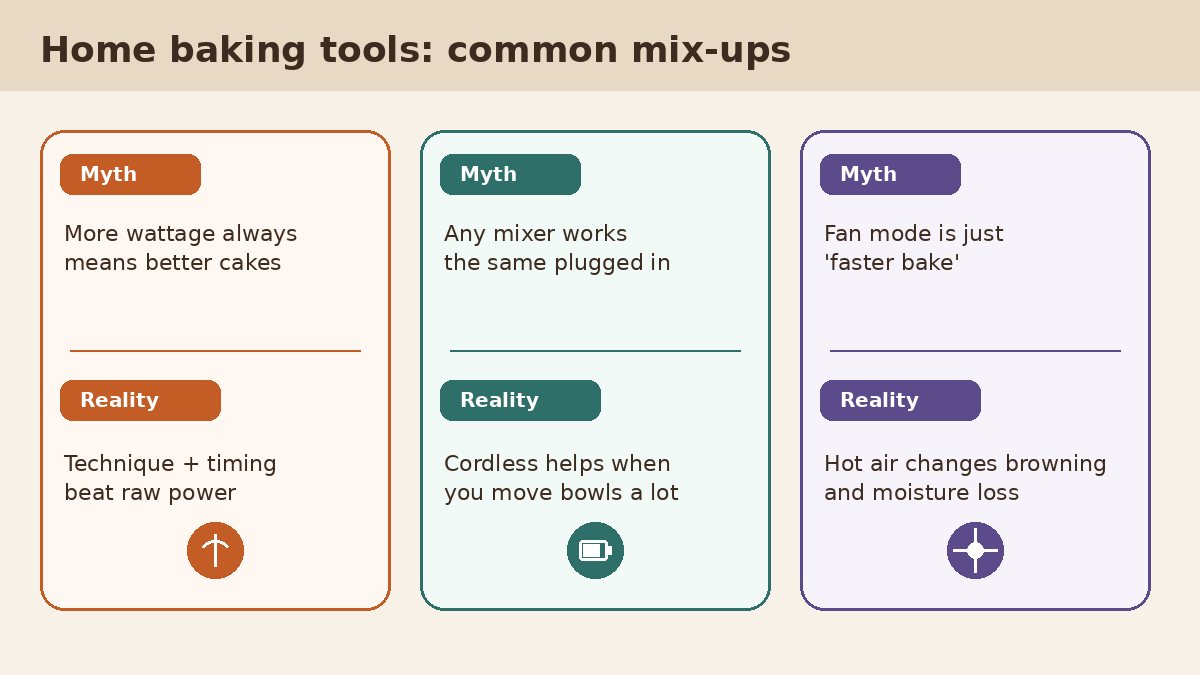
Most weekend baking fails are not about talent. They start earlier, with assumptions about tools: that a heavier motor fixes dense cakes, that a cord never matters until it trips you, or that the fan button on an oven is a free “faster” switch. Those myths waste butter and patience.
If you bake in a small Malaysian flat kitchen, space, sockets, and humidity already fight you. Understanding when a tool actually helps is the quieter skill.
Hand mixers: when cordless actually helps
A corded hand mixer is fine if you always cream butter in one fixed spot. Cordless starts to matter when you move: chilling a bowl in the fridge, whipping cream next to the sink, or rotating between two batters so nothing sits too long in a warm room.
Power still matters for stiff cookie dough, but control matters more for cake batter. Start slow with beaters already in the bowl, then climb. Overmixing after flour goes in is a classic way to get tough crumb, no matter how fancy the motor. For a practical overview of modern cordless options in the local market, see this note on a cordless mixer overview rather than treating wattage as a personality trait.
Q: Do you need cordless if you only bake once a month? Probably not. Monthly bakers usually lose more to misread temperatures than to a cable.
Battery kitchen tools: what “series” systems change day to day
A shared battery “series” is less about collecting gadgets and more about not hunting chargers mid-bake. One charged pack can move from mixer to blender attachment or scale of similar tools without a second wall socket. That sounds dull until you are creaming butter while a kettle and rice cooker already own the power strip.
Day to day, the habit shift is small: charge overnight, swap packs when the light dips, keep one spare if you bake in long sessions. Brands frame this as an ecosystem; for home bakers it is really choreography. If you want a sense of how a cordless kitchen series is packaged locally, the Kitmens One overview is a useful reference point, not a shopping list.
Myth worth retiring: more tools in the set always equals better baking. Empty counter space still wins.
Short explainer: why a fan in the oven changes browning, not just speed.
Convection ovens: hot air vs ordinary bake mode
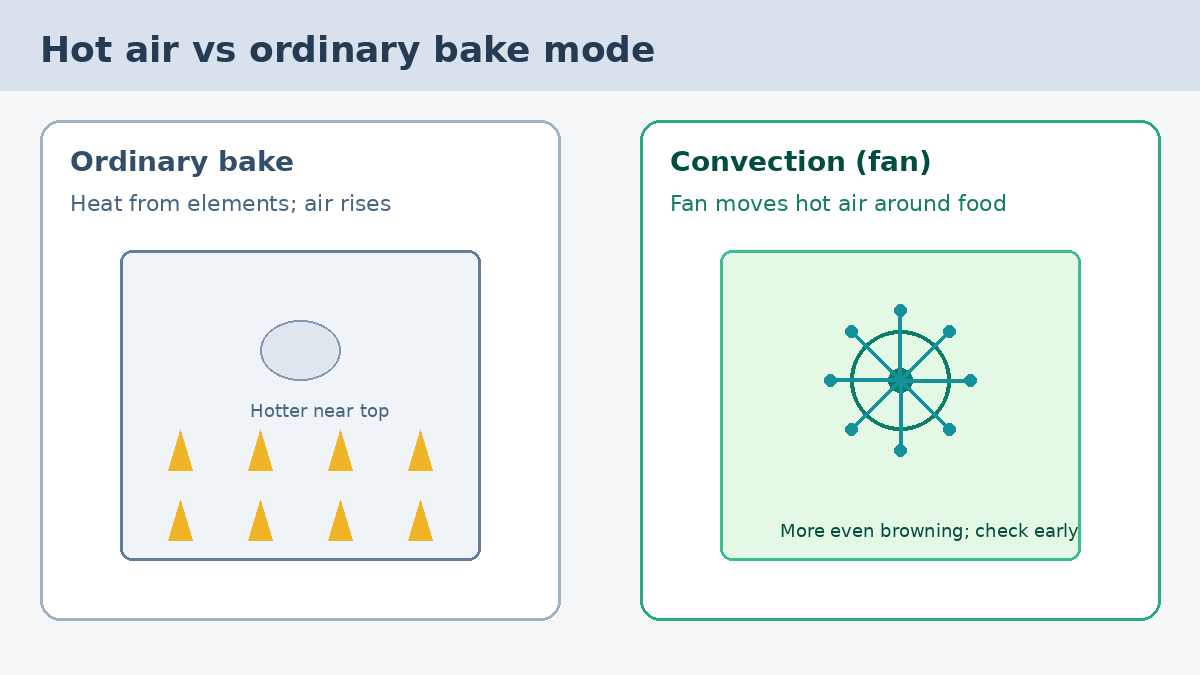
Ordinary bake mode heats from elements and relies on natural rise of hot air, so trays near the top often brown sooner. Convection (fan) mode pushes air around the food, thinning the cooler boundary layer on the surface. Food can brown more evenly and finish earlier, which is why many guides suggest lowering the set temperature by about 20°C or checking earlier. Wikipedia’s overview of a convection oven covers the physics without the marketing gloss.
Not everything loves a strong fan. Delicate cakes and soufflés can dry or set unevenly if air blasts them. Cookies, roasted nuts, and sheet trays usually benefit. For Malaysia kitchens comparing countertop and built-in options, a calm read on fan-assisted oven notes beats chasing every “air fry” label on the dial.
Technique still rules: preheated oven, middle rack unless the recipe says otherwise, and a quick rotate if your oven has a known hot corner. BBC Good Food’s guidance on creaming butter and sugar is a reminder that structure starts in the bowl before heat ever touches the batter.
A simple weekend bake workflow
- Pick one recipe you already almost know. New tools plus a new formula is how chaos arrives.
- Mise en place before you plug anything in. Soften butter, weigh flour, line trays.
- Mix with restraint. Cream until pale and fluffy, add eggs one at a time, fold flour until just combined.
- Choose the oven mode on purpose. Fan for even trays; ordinary bake when the crumb needs gentler heat.
- Cool on a rack, then taste with notes. Write one line: underbaked centre? too brown on top? That note teaches more than another gadget.
Food safety sits beside technique. Avoid tasting raw batter with eggs or untreated flour; public guidance on eggs and Salmonella risk is blunt for a reason. Bake through, then sample.
One skill to practice this month
Ignore new toys for a moment. Practice reading doneness early: open the oven two to three minutes before the recipe’s minimum time, look at colour and set edges, then decide. That single habit pairs with any mixer and any bake mode, and it is the upgrade that actually shows up on the plate.